
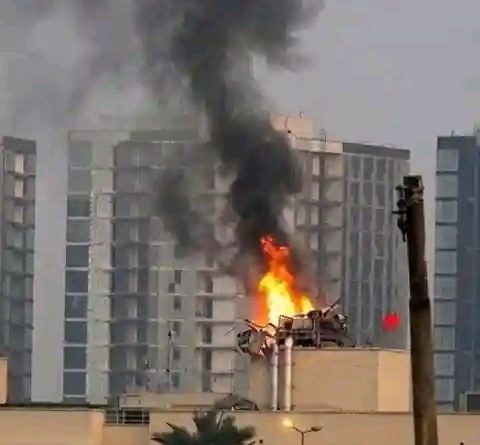
Missile Attack on U.S. Embassy in Baghdad Raises Middle East Security Concerns
A missile strike targeting the Embassy of the United States, Baghdad has intensified security concerns in the Middle East after the attack occurred inside the heavily fortified Green Zone in Baghdad, the capital of Iraq. The incident is the latest in a series of attacks on U.S. interests in the region and highlights rising tensions involving the United States, Iran, and their regional allies.
On March 14, 2026, a missile landed inside the compound of the U.S. Embassy in Baghdad, striking a helipad area and causing visible damage. Security officials reported smoke rising from the embassy complex shortly after the impact.
Although the strike caused structural damage within the diplomatic compound, early reports indicated no confirmed fatalities. Iraqi security forces quickly secured the surrounding area and began investigating the origin of the attack.
The embassy compound, located inside Baghdad’s fortified Green Zone, is one of the most secure diplomatic facilities in the world. Despite its high level of protection, it has been targeted multiple times in recent years due to regional political tensions.
No group immediately claimed responsibility for the missile strike. However, analysts believe the attack may be linked to Iran-backed militia groups operating in Iraq, which have previously carried out rocket and drone attacks against U.S. military bases and diplomatic sites.
The tensions are part of the broader geopolitical rivalry between the United States and Iran, which has often played out within Iraqi territory.
The attack on the U.S. Embassy in Baghdad is significant for several reasons:
Diplomatic Security Risk: Embassies represent a country’s presence abroad, and attacks on them are considered serious international incidents.
Regional Escalation: Rising tensions between the United States, Israel, and Iran have increased the likelihood of retaliatory strikes in the Middle East.
Iraq remains strategically positioned between competing regional powers, making it vulnerable to proxy conflicts.
Security experts warn that continued attacks on diplomatic facilities could lead to stronger military responses or increased international involvement.
Following the attack, U.S. officials issued security alerts advising American citizens in Iraq to remain cautious and consider leaving the country due to potential threats from rockets, drones, and militia activity.
Iraqi authorities also reinforced security inside the Green Zone and increased patrols around foreign embassies and government buildings to prevent further incidents.
The missile strike underscores the fragile security environment across the Middle East. Conflicts involving major regional actors continue to raise concerns about wider instability.
While investigations into the Baghdad embassy attack are ongoing, the event highlights how diplomatic missions and foreign interests remain vulnerable amid escalating geopolitical tensions.