
How Christianity First Came to Nigeria: The Story Many Nigerians Never Heard
Christianity has played a major role in Nigeria’s history, influencing education, healthcare, politics, culture and society. But Christianity did not arrive in Nigeria at one particular moment. Its introduction happened in several stages, beginning centuries before the establishment of modern Nigeria.
Early Contact With Christianity
One of the earliest recorded connections between Christianity and the area now called Nigeria came through Portuguese contact with the Kingdom of Benin in the 15th century.
Portuguese explorers and traders reached the Benin Kingdom in the late 15th century. During this period, Christian missionaries and Catholic priests also became involved in attempts to establish Christianity at the royal court.
In the 16th century, Catholic missionaries visited Benin, and some members of the royal court showed interest in Christianity. However, Christianity did not become firmly established among the wider population at this time.
Christianity Returns in the 19th Century
The more permanent spread of Christianity began in the 19th century, particularly among communities in southern Nigeria.
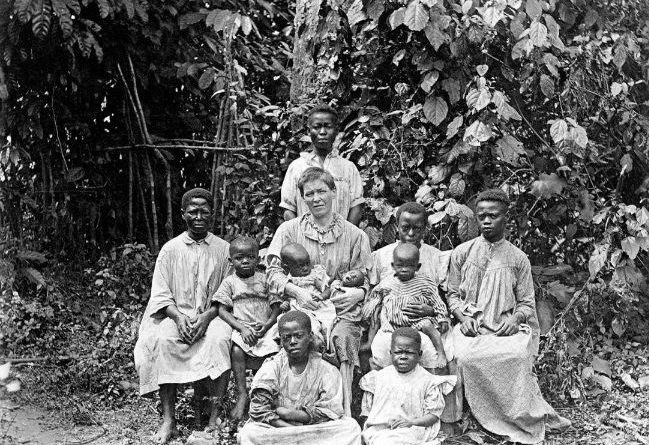
Missionaries from different Christian organisations established schools, churches and medical centres. Among the most influential were the Church Missionary Society (CMS), Methodist missionaries, and Baptists.
One of the most important figures was Samuel Ajayi Crowther, a Yoruba man who had been captured as a child and sold into slavery before being rescued. He later became a Christian, studied in Sierra Leone, was ordained as a missionary and eventually became the first African Anglican bishop in 1864.
Crowther played a major role in spreading Christianity and translating Christian materials into African languages, including Yoruba.
The Role of Mission Schools
Missionaries did more than establish churches. They created schools where Nigerians learned literacy and other subjects.
These schools produced some of the earliest generations of Western-educated Nigerians and helped create a new educated class.
Missionary activity expanded through cities and communities including Lagos, Abeokuta, Onitsha and Calabar, although the process was sometimes complicated by local traditions, politics and resistance to European influence.
Christianity in Modern Nigeria
By the 20th century, Christianity had become firmly established in many parts of southern Nigeria and later expanded significantly into other regions.
Today, Nigeria has one of the world’s largest Christian populations, with Catholics, Anglicans, Baptists, Methodists, Pentecostals and many other denominations.
History you won’t find in your school notes. Join our Telegram channel for more Nigerian history stories.
The history of Christianity in Nigeria is therefore not simply a story of European missionaries. It also includes African converts, teachers, translators and leaders who played a crucial role in shaping Christianity in the country.
From the first Portuguese contacts with Benin to the missionary movements of the 19th century, Christianity’s journey in Nigeria was long, complex and deeply connected to the country’s broader history.
